Lagavulin 12 vs 16 Year: Two Different States of the Same Fire
A journey between twelve years of raw power and sixteen years of matured depth. When I placed these two versions of Lagavulin side by side, I found on my palate two characters that complement each other — yet remain worlds apart.

Some whiskies draw you toward definitions; Lagavulin draws you into a story. That brooding distillery on the southern shore of Islay has preserved the same primal, dense, and unrelenting approach to peatiness for centuries. Yet two different maturation periods give that philosophy two entirely different voices. In this piece, I sat the 12-year and the 16-year side by side — like two separate chapters belonging to the same night.
Two Faces of the Same Distillery
Lagavulin Distillery has been producing whisky near Port Ellen since 1816. Both versions share the same source water, the same boggy peat, and the same long fermentation tradition. What sets them apart is the mark that time leaves behind. The 12-year comes to market each year as part of the Special Releases collection — bottled at cask strength, meaning natural barrel strength — and the alcohol level varies from year to year, typically falling in the 56–58% range. The 16-year, meanwhile, is a permanent member of the lineup: 43% ABV, chill-filtered, watered down, standard strength. These two technical distinctions in the bottling decisions tell you almost everything about each character before the glass ever reaches your lips.

Lagavulin 12 Year: Untamed Fire
When I brought the glass to my nose, the first thing that arrived was a warning. The alcohol is sharp and piercing — but then, as though a door were being gently nudged open, wet gravel, sea kelp, and cold smoke come drifting in. I wait a few minutes. I add a drop of water. And that is when the true character unfolds: smoked meat, a citrus sharpness like freshly grated lemon zest, a faint hint of allspice, and far in the distance, barely perceptible, a trace of honey.
On the palate, this version gives you no time to settle in. The arrival is powerful, dense, and peaty. The smokiness here is not background — it is the main figure. Alongside it: charred wood, salt, and the harsh breath of the sea. In the mid-palate there is a faint, fruity stirring — perhaps dried pear, perhaps only imagination — but before long, tobacco and a herbal bitterness reclaim everything.
The finish is long and dry. Smoke trembles at the back of the palate; not because it is dying out, but because it has settled in. It stays there for minutes on end. This is not a single malt so much as a stance.
"The 12-year Lagavulin doesn't listen to me. It speaks. And I simply take notes."

Lagavulin 16 Year: A Hardness Softened by Time
Later that same evening, I open the 16-year. The colour alone makes an immediate statement: darker, a deep amber. The nose, unlike the 12-year's, is in no hurry — it deserves to be waited upon above the glass. There is smoke, of course; Lagavulin without smoke is unthinkable, but this time it is a gentle smoke. Fireplace smoke: it has left its mark, yet it does not lunge at you.
On the nose, salted caramel, dried fruit — raisins, figs — and a touch of dark chocolate emerge. Then, slowly, hazelnut oil and oak arrive. This aroma does not conjure Islay's rugged terrain so much as the weathered wooden pier at its edge: more at peace, but no less sincere.
On the palate the opening is creamy and sweet — the exact opposite order from the 12-year. It envelops you first, then the smoke arrives. The Lagavulin signature is there, but this time it behaves like a guest, not a host. A note of hazelnut butter and smoked meat carries through to the mid-palate, while salt runs along a prominent but unshowy line. Then the familiar peat char, oak, and dried herb surrender themselves to the finish.
The finish is less aggressive than the 12-year, but more layered. Oak and cinnamon largely take the place of tobacco. And this finish continues, far more quietly, for a very long time.
Side by Side: What Changes, What Endures?
Both versions carry the spirit of Lagavulin: intense peatiness, the salt pressure of the sea, a deep and lingering finish. But their characters diverge in unmistakable ways. The 12-year, powered by cask strength, speaks a language that is direct and brooks no opposition. The 16-year speaks with a hardness that time has softened but not erased — more accessible, yet uncompromising in its depth.
- Alcohol: 12-year ~56–58% (varies by year, cask strength); 16-year 43%
- Colour: 12-year pale gold to amber; 16-year deep amber
- Smoke profile: raw and assertive in the 12-year; matured and rounded in the 16-year
- Sweetness: minimal in the 12-year; present and balanced in the 16-year
- Accessibility: 16-year more inviting; 12-year more demanding
Which version is better? That is the wrong question. The right one is: what kind of conversation do you want to have tonight?
Conclusion: The Same Village, Different Generations
When I first tasted Lagavulin, it was the 16-year that introduced itself to me. For a long time, it was the only one that existed in my mind. But the first time I poured the 12-year into a glass, I felt as though I had walked into another room of that familiar house — rawer, more angular, walls not yet plastered, yet one where the structure's strength makes itself felt all the more clearly. Both are authentic. Both are Lagavulin.
If you are only just discovering single malt whisky, the 16-year will welcome you in. If you have already walked some distance down this road, the 12-year will put you to the test. And you don't need to pass the test — you only need to sit down, and listen.
Frequently Asked Questions
- What is the fundamental difference between Lagavulin 12 Year and 16 Year?
- The 12-year is bottled each year as a special release at cask strength (approximately 56–58% ABV); it is rawer, more aggressive, and more intensely peaty. The 16-year, at 43% ABV, offers a standard-strength, softer, and more layered profile — generally considered more accessible both for newcomers and experienced drinkers alike.
- Does the Lagavulin 12 Year come out every year?
- Yes. The Lagavulin 12-year is a regular part of Diageo's annual Special Releases collection. However, the alcohol level and flavour profile may show minor variations from year to year depending on cask selection.
- Where is Lagavulin produced?
- Lagavulin Distillery is located on the southern shore of the Isle of Islay in Scotland, near the town of Port Ellen. It was founded in 1816.
- How heavily peated is Lagavulin 16 Year?
- Lagavulin 16 Year is considered to be in the very heavily peated category, with a phenol level of around 35 ppm. Smoke is central to its flavour profile; however, sixteen years of maturation have layered caramel, dried fruit, and oak on top of that smokiness.
- Which would you recommend for someone trying Islay whisky for the first time?
- The 16-year offers a far more inviting entry point for newcomers to the Islay style, thanks to its non-cask-strength structure and its rounder, more balanced character. The 12-year appeals to drinkers who have already gained some experience with peaty whiskies.
Related
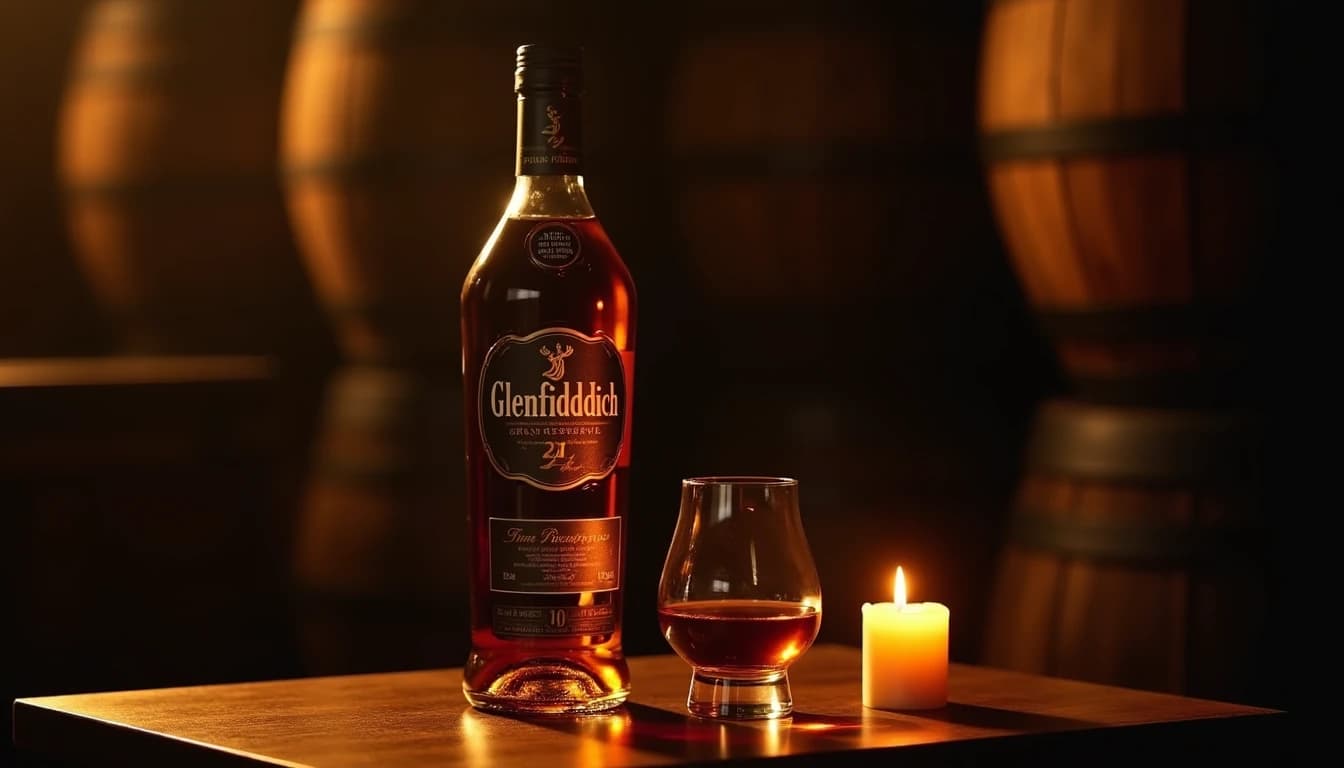
Glenfiddich 21 Year Old Gran Reserva: The Patience a Rum Cask Teaches
Twenty-one years of maturation, followed by a finishing in rum casks — this is the story of a transformation that was never in any hurry. When I first tasted the Gran Reserva, time stopped mattering.