The Story of Johnnie Walker: The Legendary Journey of the Striding Man
Starting from a small grocer's shelf in 1820s Scotland, Johnnie Walker has become a legend recognized in every corner of the world. This is not the story of a drink, but of a character, a philosophy, and the spirit of 'Keep Walking.'
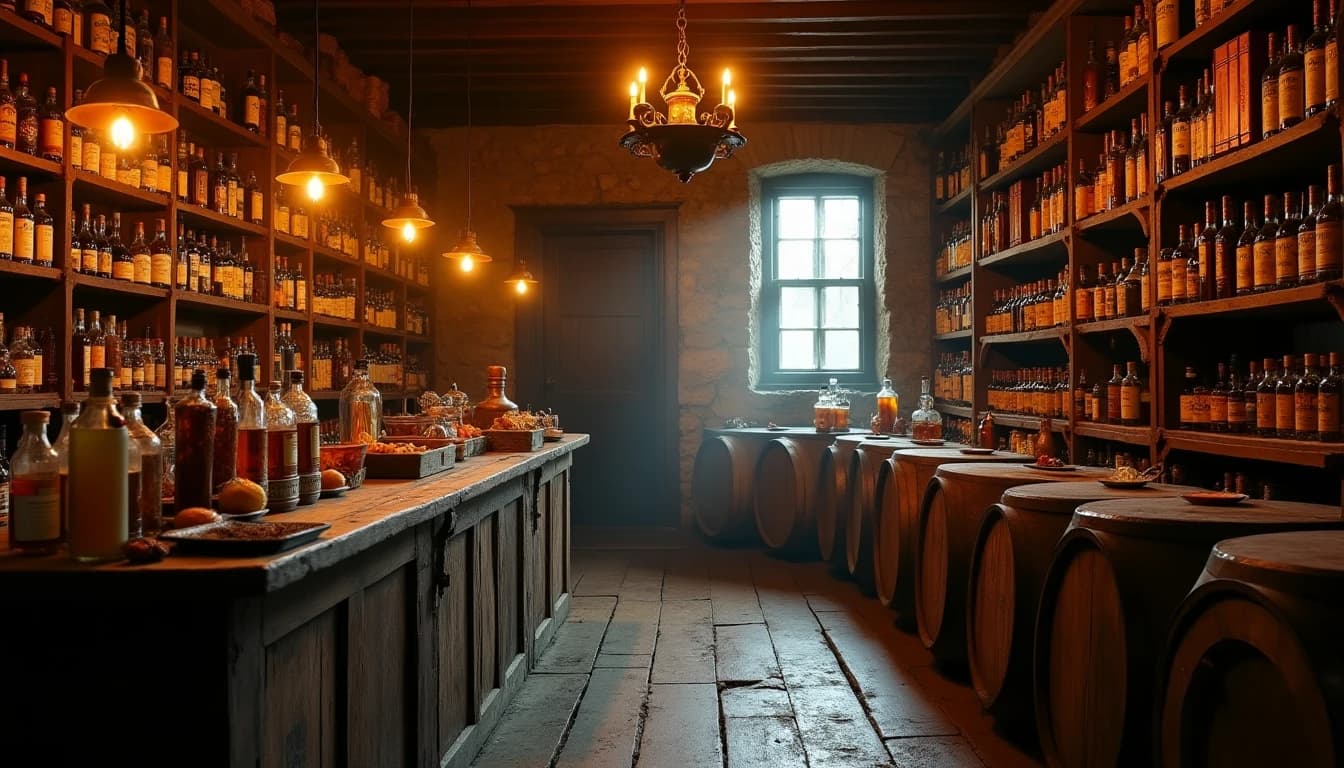
Some stories begin inside a bottle. Johnnie Walker's began at a grocer's counter — in the town of Kilmarnock, Scotland, on a damp and misty autumn day in the 1820s. Two hundred years have passed since then. But the man behind that counter is still walking.
The Little Grocer's Shop in Kilmarnock
John Walker was born in 1805 on the Todriggs farm in Ayrshire. When his father Alexander Walker died in 1819, young John opened a grocer's shop in Kilmarnock with a small inheritance and a great sense of responsibility. He was only fourteen years old.
In the Scotland of that era, whisky was an unreliable drink. Products from a single distillery offered different flavors from year to year; when the harvest was poor, the barley would change, and depending on the condition of the water source, the results of distillation became unpredictable. John Walker noticed this inconsistency. And as a grocer, he had a powerful tool at his disposal: the freedom to blend whisky casks from different sources.
Walker's blends transcended the limitations of any single distillery's output. Creating a consistent flavor profile by drawing on multiple regions and multiple characters was very nearly a challenge to the conventional understanding of whisky at the time. But customers noticed. And they came back.

Son, Grandson, and the Foundations of an Empire
John Walker died in 1857. His son Alexander Walker inherited the shop and the blending philosophy. This is where the real transformation began.
Alexander carried his father's local trading vision into something of global scale. In 1865, he launched the first commercial blend under the name Old Highland Whisky. Then came an even more critical step: he adopted the square bottle, a new technology of the age. The square bottle reduced breakage during transit and made more efficient use of shelf space. It was practical — but beyond that, it was visually distinctive.
Another revolutionary touch was the angle of the label. Alexander Walker tilted the bottle label exactly 24 degrees clockwise. His reasoning was both aesthetic and functional: the angled label allowed for larger type in the printing process, and it caught the eye instantly on the shelf. This detail remains one of the most recognizable features of Johnnie Walker bottles to this day.
Alexander's sons — in particular Alexander Walker II and George Patterson Walker — transformed the business into an international trading network on the threshold of the twentieth century. In 1909, the naming system we still know today was formalized: Johnnie Walker Red Label and Johnnie Walker Black Label. Red was the blend that reached a broad audience, distinguished by its accessible character. Black was more aged, more layered — and more ambitious.
The Striding Man: The Birth of an Icon
In 1908, British illustrator Tom Browne quickly sketched a figure on a dinner napkin: a man in a top hat, walking stick in hand, striding forward with great purpose. That small sketch planted the seed of one of the most enduring brand icons in history.
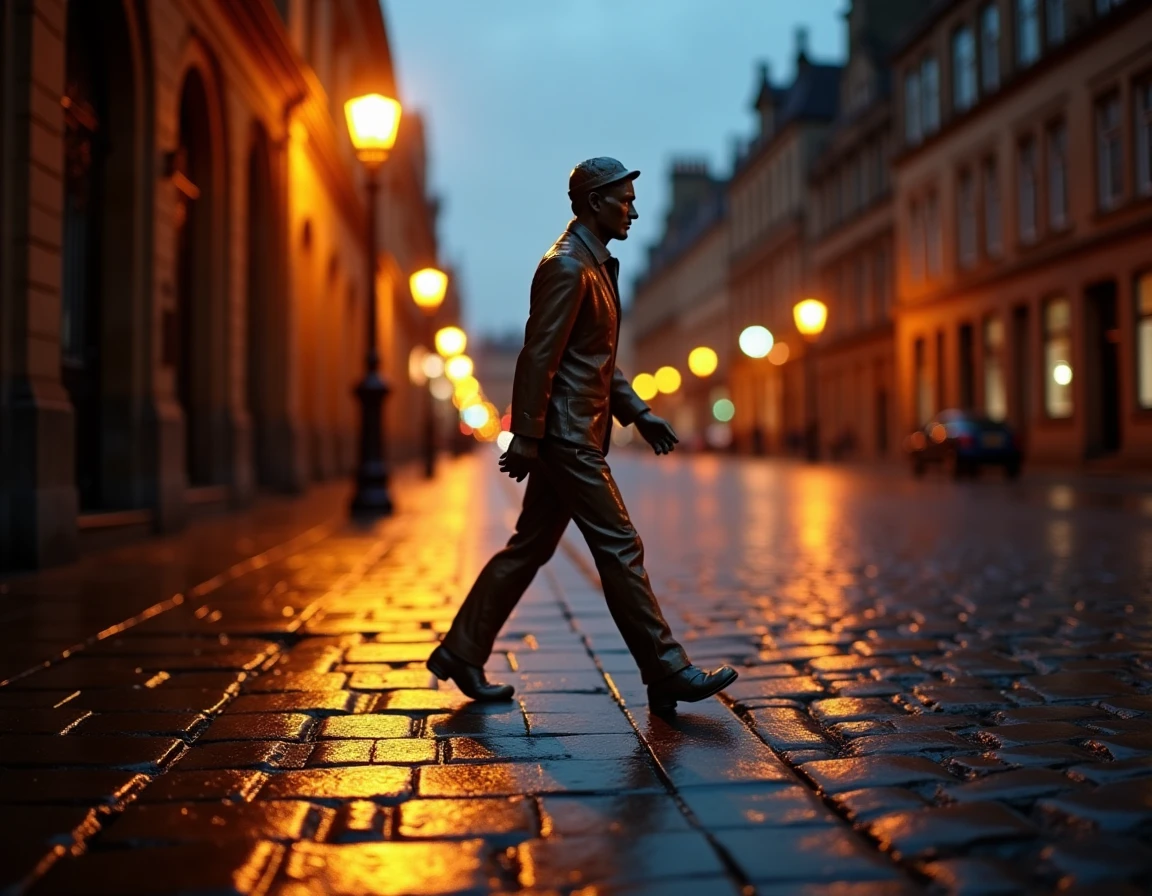
The Striding Man has been the symbol of Johnnie Walker ever since. But what catches the eye is the figure's posture. He walks facing not right, but left — that is, against the conventional direction of reading. This represents forward motion — not toward the past, but toward the future. Whether it was intentional or accidental remains debatable, but the meaning became inseparable from the figure over time.
Throughout the twentieth century, the Striding Man was redrawn and modernized countless times. The walking stick changed, the hat sometimes disappeared and sometimes returned, and the proportions adapted to the aesthetic sensibilities of each era. But that great stride, that resolute bearing, never disappeared. When it was united with the Keep Walking slogan in the 2000s, the figure became not merely a logo but the symbol of a philosophy for living.
Blend Culture and Its Place in the World of Whisky
For the single malt purist, blended Scotch has at times been a category looked down upon. Yet the craft that Johnnie Walker created was built precisely upon dismantling that prejudice.
Black Label contains a complex blend of malt and grain whiskies matured for twelve years and beyond. The fruity elegance of Cardhu, the smoky depth of Caol Ila, the grassy nuances of Cragganmore, the meaty intensity of Mortlach — keeping the contrasting characters of Speyside, Islay and the Highlands in balance requires a far more refined craft than producing the output of a single distillery. The name for that craft is master blending.
Johnnie Walker's head blenders became the invisible architects who, over the years, preserved the voice of the brand. To scan hundreds of casks with the nose and capture consistency — this is both science and art. And the foundation of this tradition reaches back to the conceptual seeds John Walker sowed in that little Kilmarnock grocer's shop.
Global Expansion: A Walk Across Every Continent
From the 1890s onward, Johnnie Walker spread across the world by following the trade routes of the British Empire. India, Australia, South Africa, North America — the whisky took root, seeping from port cities into inland markets. Even during the scarcity of the First and Second World Wars, the brand managed to maintain its presence; partly thanks to its consistent quality, and partly through the trust that had grown up around its name.
In the second half of the twentieth century, Johnnie Walker became the first name that came to mind when people thought of Scotch whisky. Its acquisition by Diageo in 1997 significantly expanded the brand's global distribution and marketing capacity. During this period, the premium ranges, led by Blue Label, also gained considerable momentum.
Today, Johnnie Walker is a recognized name in more than 180 countries. While Red and Black Label maintain their standing as the two most widely known Scotch blends in the world, the brand continues to deepen its story with Blue Label, Gold Label Reserve, Double Black, and a series of special releases.
The Evolution of the Label: When Color Becomes a Language
Johnnie Walker's color system has, over time, formed a vocabulary all its own. Each label color represents both a distinct flavor profile and a distinct set of expectations for the experience. Red, alongside soda in a nightclub bar. Black, quietly, at the end of a dinner. Gold, marking a special occasion. And Blue — a declaration of intent in every sense: the bottle you present says far more than the whisky inside it.
This language of color is the most ingenious part of the way the brand reinvents itself. To offer both an everyday product and a collector's item under the same roof — very few brands manage this as convincingly.
Two Hundred Years On: Still Walking
The blends John Walker sold in the 1820s are, of course, incomparable to today's Black Label. But the idea behind that little shop — consistency, the power of blending, the determination to reach a broad audience — is still alive.
Every story told about Johnnie Walker eventually arrives at the same question: why does a brand endure for two hundred years? The technical answer is blend quality, distribution networks, and marketing acumen. But perhaps the real answer is far simpler: because that figure, from the day it was born on a dinner napkin, has never stopped walking — with unwavering resolve. And people have always had a tendency to follow those who keep moving forward.
Frequently Asked Questions
- When was the Johnnie Walker brand founded?
- The foundations of Johnnie Walker date back to 1820, when John Walker opened a grocer's shop in Kilmarnock. After his son Alexander Walker took over the shop, he launched the first commercial blend, Old Highland Whisky, in 1865, and the brand began evolving toward the identity we know today.
- How did the Striding Man figure come about?
- British illustrator Tom Browne, at a dinner in 1908, quickly sketched a man in a top hat striding forward with a walking stick on a dinner napkin. Over time, this sketch became Johnnie Walker's iconic 'Striding Man' symbol.
- Why are Johnnie Walker labels printed at an angle?
- The idea of tilting the label 24 degrees belongs to Alexander Walker. The angle both allowed for larger type in the printing process and ensured the bottle stood out immediately on the shelf. This detail remains one of the brand's most recognizable visual features.
- Is Johnnie Walker blended or single malt?
- Johnnie Walker falls entirely within the blended Scotch category. Products such as Black Label are created by blending malt and grain whiskies from different regions, including Cardhu, Caol Ila, and Cragganmore.
- Which company does Johnnie Walker belong to?
- Since 1997, Johnnie Walker has been part of the portfolio of Diageo, the world's largest spirits company.
- How many different labels does Johnnie Walker have?
- The core range includes Red Label, Black Label, Double Black, Gold Label Reserve, Platinum Label, and Blue Label. In addition, there are limited-edition special releases and region-specific variants.