The Story of Bowmore: The Secret of Islay's Oldest Distillery
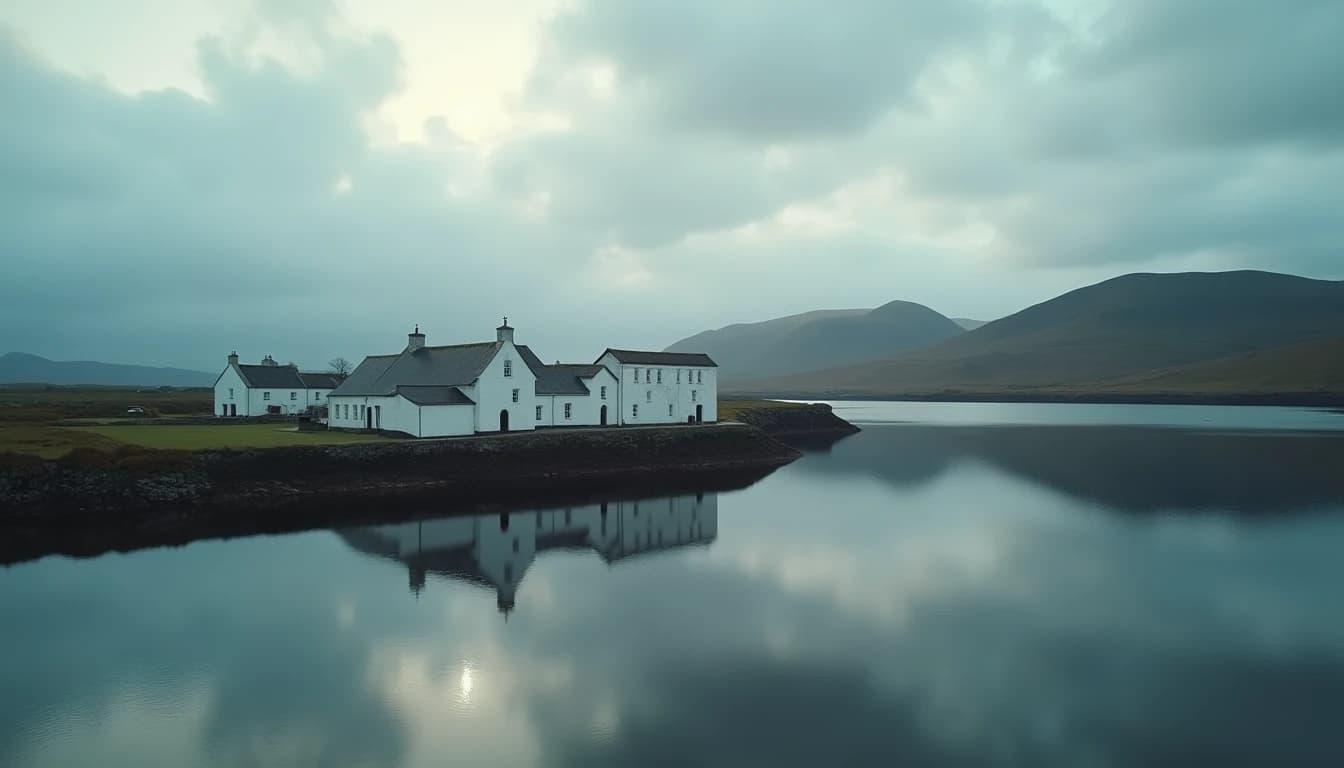
Standing on Islay's shore since 1779, Bowmore is not merely a distillery — it is a story shaped by sea, smoke, and time. Casks resting between the cold walls of No.1 Vault mature on the breath of the ocean.
It's difficult to describe exactly what I felt the first time I tasted Bowmore. What struck my palate was not simply a whisky — it was as though the essence of a long journey, a salt-laden wind, and a very ancient patience had been distilled into a single glass. The island of Islay is already a place unlike any other; yet Bowmore feels like a world unto itself, even within that island.
1779: Where It All Began on a Shoreline
Bowmore Distillery was officially founded in 1779, according to the records. That date matters, because it makes it one of the oldest continuously operating distilleries in Scotland. Its founder was a merchant by the name of David Simson — a modest figure who hasn't attracted much documentation. But the mark he left is far greater than his name.
The distillery was built almost leaning against Loch Indaal on the western coast of Islay. Its whitewashed walls form the iconic image seen by every passing vessel. It sits at the very heart of the village, woven together with its church, its houses, its people. This geographical and social closeness makes Bowmore feel less like an abstract production facility and more like a living organism.
In those days, illicit distilling was rampant across Islay. Simson's venture was one of the early examples of stepping out of that grey area and into a licensed, transparent model of production. In a sense, the founding of Bowmore marked the beginning not only of a business, but of a more honest tradition.
No.1 Vault: Casks Sleeping Beneath the Sea
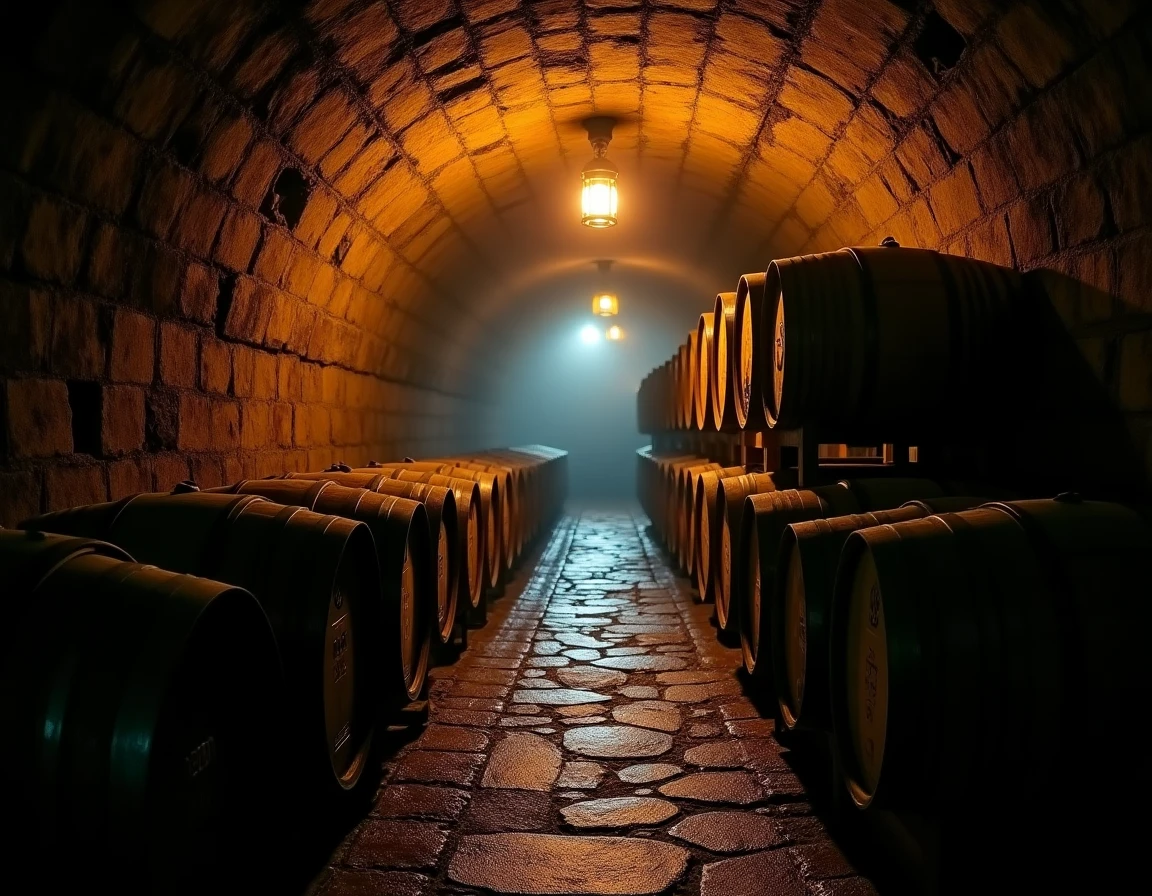
There is much that makes Bowmore special, but perhaps the most striking is this: its maturation warehouse — known as No.1 Vault — is a structure positioned below sea level. When conditions turn rough, the waves of Loch Indaal practically caress the walls of this cellar; on certain nights, water is said to seep inside.
This is not merely a poetic metaphor. The humidity and temperature fluctuations below sea level directly affect the way casks breathe. As whisky evaporates year by year through the wood's expansion and contraction — that loss known as the "angel's share" — it acquires a slightly saltier, more maritime character at Bowmore. Knowing this in theory is one thing; pouring a whisky drawn from No.1 Vault into a glass and bringing it to your nose is quite another.
"The casks here are in conversation not just with the wood, but with the ocean itself."
The walls of the cellar are rough stone, the ceiling low, the light scarce. When you step inside — as I had the fortune to do on a tour — the air is heavy and damp, faintly salty. Casks stand in rows, some placed here decades ago. Time seems to move differently in here.
Smoke and Fruit: The Art of Balance
When Islay whisky is mentioned, the first word that comes to mind is usually peat or smoke. But Bowmore gently subverts that cliché — or more precisely, expands it. The peat smoke used when malting the barley is indeed present, but Bowmore wields it not as a weapon, but as a colour.
Bowmore's PPM (phenol parts per million) typically hovers around 25 — roughly half that of Lagavulin or Ardbeg, yet this doesn't make it weaker; it makes it different. The smoke doesn't overwhelm the fruit; the two dance together. In the 12-year-old expression in particular, notes of dark cherry, ripe apricot, and salted leather appear simultaneously. As you drink, you find yourself asking, "Is this smoke or fruit?" — the answer is both, at once.
Achieving this balance is, in fact, a remarkably delicate undertaking. The duration of malting, the region where the peat is cut, the drying temperature, even the humidity of a given day — all of these influence the outcome. Bowmore still operates its own maltings, one of the few distilleries on Islay to continue this tradition. Processing its own barley in-house is perhaps the most fundamental way of securing that consistency.
Japanese Ownership: Modernisation or Deepening?
In 1994, Bowmore was acquired by Suntory, the Japanese drinks giant. The news was met with mixed feelings in the Scotch whisky world at the time — an understandable reaction. For some, a Scottish tradition stretching back centuries passing into Japanese hands represented a cultural rupture.
Looking back from today, however, the picture is more nuanced. Suntory is a company that takes its own whisky culture extraordinarily seriously — the name behind Hakushu and Yamazaki. The investment they brought to Bowmore enabled the modernisation of facilities, an increase in storage capacity, and more meticulous long-term cask strategies. Yet the distillation process, the barley varieties used, and the malting tradition were preserved.
Whether the change in ownership has left a genuine imprint on the whisky's character is difficult to say. Subtle differences can be detected when comparing older bottlings with contemporary ones, but attributing those differences to a single cause would be misleading: the year's harvest, cask selection, maturation period — all of these vary simultaneously. Whisky is, at its core, a product of time and place; not of its owner.
At That Hour of the Evening: Drinking Bowmore
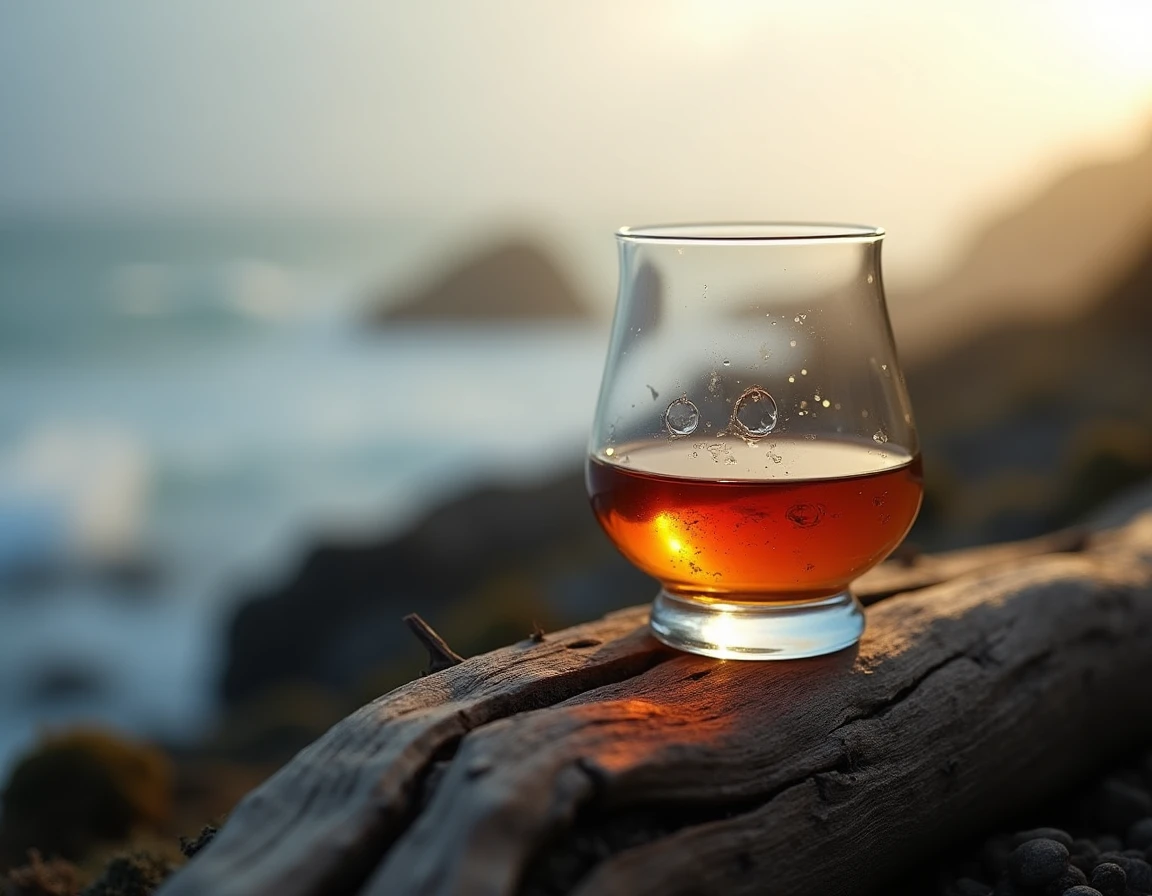
It was a late autumn evening. Outside was dark; a single lamp burned inside. The Bowmore I poured into my glass was an 18-year-old — its colour darker than amber, almost copper. After warming the nose slightly, the aromas arrived: first salt air, then orange peel, then distant coal smoke. Somewhere within it, flowers too — perhaps lavender, perhaps merely imagination.
On the first sip, the tongue catches sweetness first — honey, dried fig. Then the smoke arrives, but gently. At the finish, a long saltiness lingers. As though there were a small ocean inside the glass.
That is Bowmore — it takes you somewhere. And that somewhere is unmistakably Islay.
Conclusion: Time and Salt
The story of Bowmore is less a grand brand narrative than a story of people and place. Those white buildings that have stood on the shore of Loch Indaal since 1779 have preserved their essence through countless changes of ownership, industrial transformation, and waves of globalisation — or at least, that is how it feels. The casks resting between the cold stone walls of No.1 Vault prove it, quietly. The balance of smoke and fruit is the product of a production philosophy that acknowledges inconsistency yet refuses to leave the door open to it. And with every sip, I am reminded of this: some things cannot be rushed.
Frequently Asked Questions
- When was Bowmore distillery founded?
- Bowmore was officially founded in 1779 by David Simson. This date makes it one of the oldest continuously operating distilleries in Scotland.
- What is Bowmore No.1 Vault and why is it special?
- No.1 Vault is Bowmore's maturation warehouse, positioned below sea level. Situated right on the edge of Loch Indaal, the humidity and temperature fluctuations within this cellar impart a distinctive saltiness and maritime character to the whisky.
- How much peat smoke does Bowmore whisky contain?
- Bowmore's phenol level (PPM) is approximately 25. While this is lower than heavier-peated Islay whiskies such as Lagavulin or Ardbeg, it offers a well-balanced profile in which smoke and fruit notes coexist harmoniously.
- Who produces Bowmore today?
- Bowmore has been part of the Japanese drinks company Suntory since 1994. Suntory also owns the Yamazaki and Hakushu distilleries.
- Does Bowmore operate its own maltings?
- Yes. Bowmore is one of the few distilleries on Islay that still operates its own maltings. This allows it to maintain direct control over the barley malting process and to sustain its characteristic smoke-fruit balance.
- In which region is Bowmore produced?
- Bowmore is located on the island of Islay on the west coast of Scotland, right on the shore of Loch Indaal.